


.svg)
Educational Approach

.avif)
.avif)
.avif)
.avif)
Our definition of learning

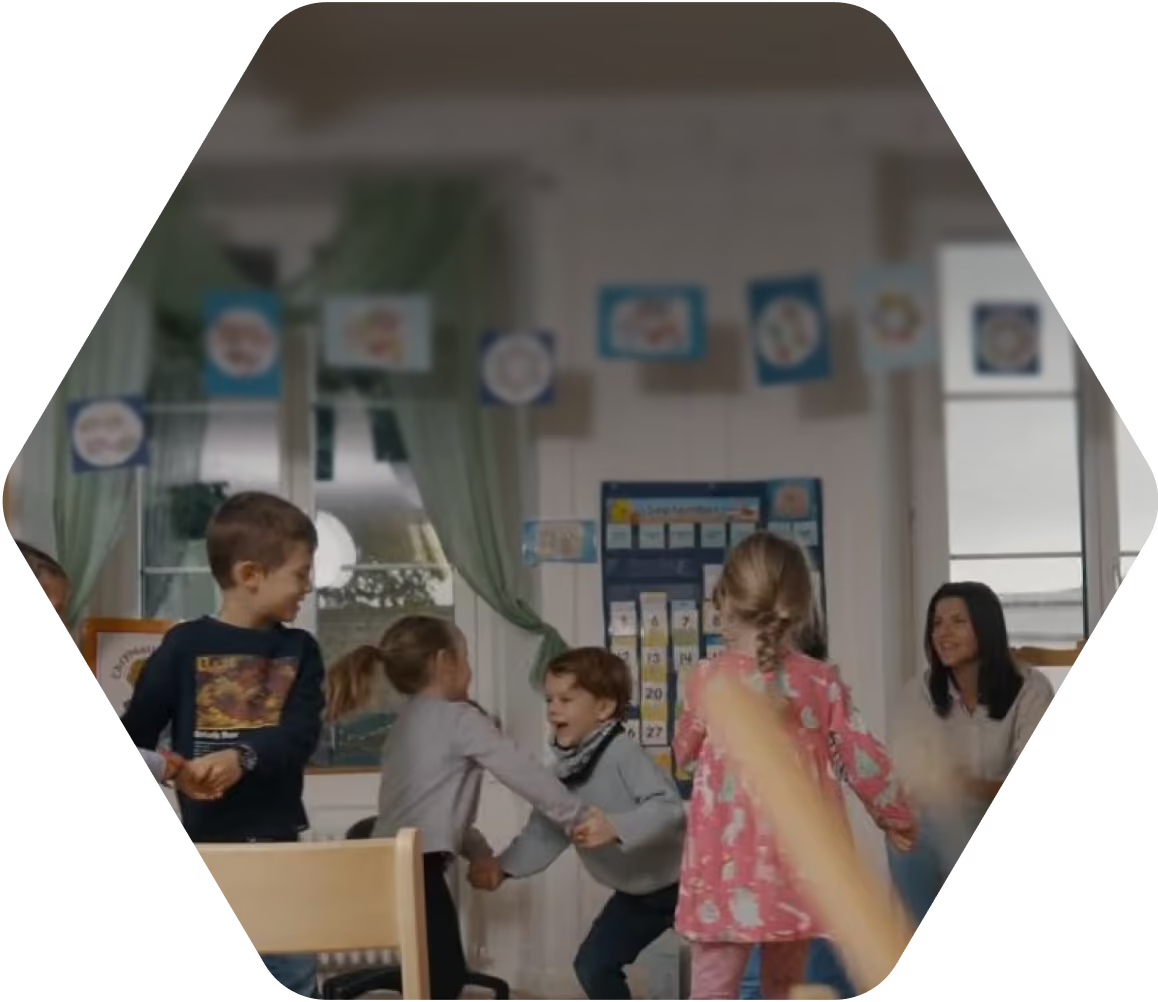
Learning is how we grow. It happens when we are curious, ask questions, and try new things. Learning is continuous, helps us understand more than we did before, build important skills, and learn how to care for others and ourselves. With support from teachers, parents and friends, we learn in a safe place, make good choices, and use what we learn in everyday life.


Bilingual
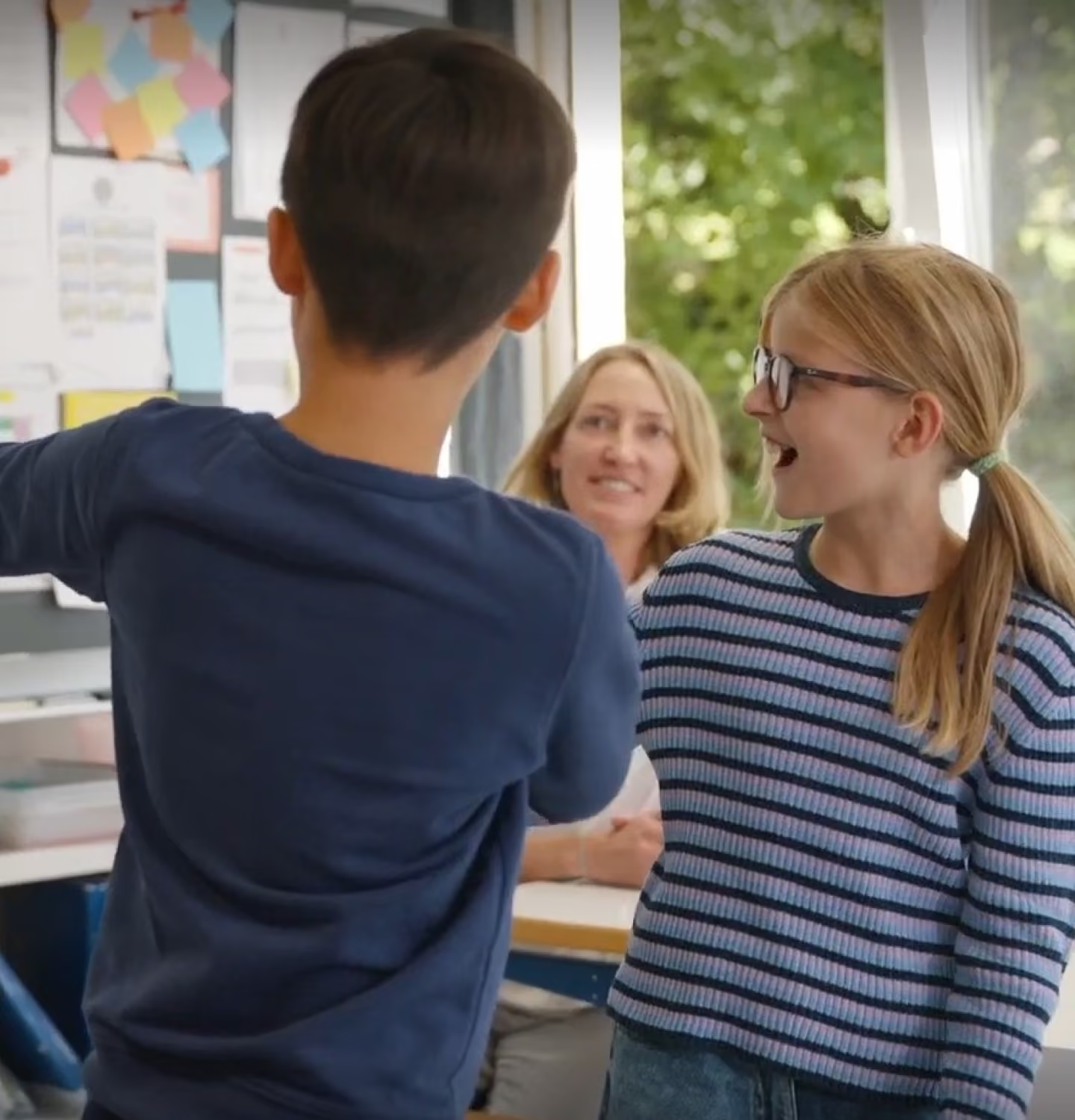
Our school offers a 50:50 full immersive teaching and learning experience with teachers who are native speakers. The school languages of English and German are treated equally, with students experiencing school like in a native English and German context. Our students not only learn the English and German language but learn in English and German. Our educational approach aims for our graduates to reach native or near native level by the time they graduate from our school in Grade 6. The language competencies gained remain for a lifetime.
.avif)
.svg)
Challenging
Our programme offers an academically challenging path. Students are supported and expected to take ownership of their learning journey and develop healthy approaches to learning. The majority of our students strive to enter higher education through transitioning to a path that leads them to either the Swiss Matura or an equivalent international leaver’s qualification following their time with us.
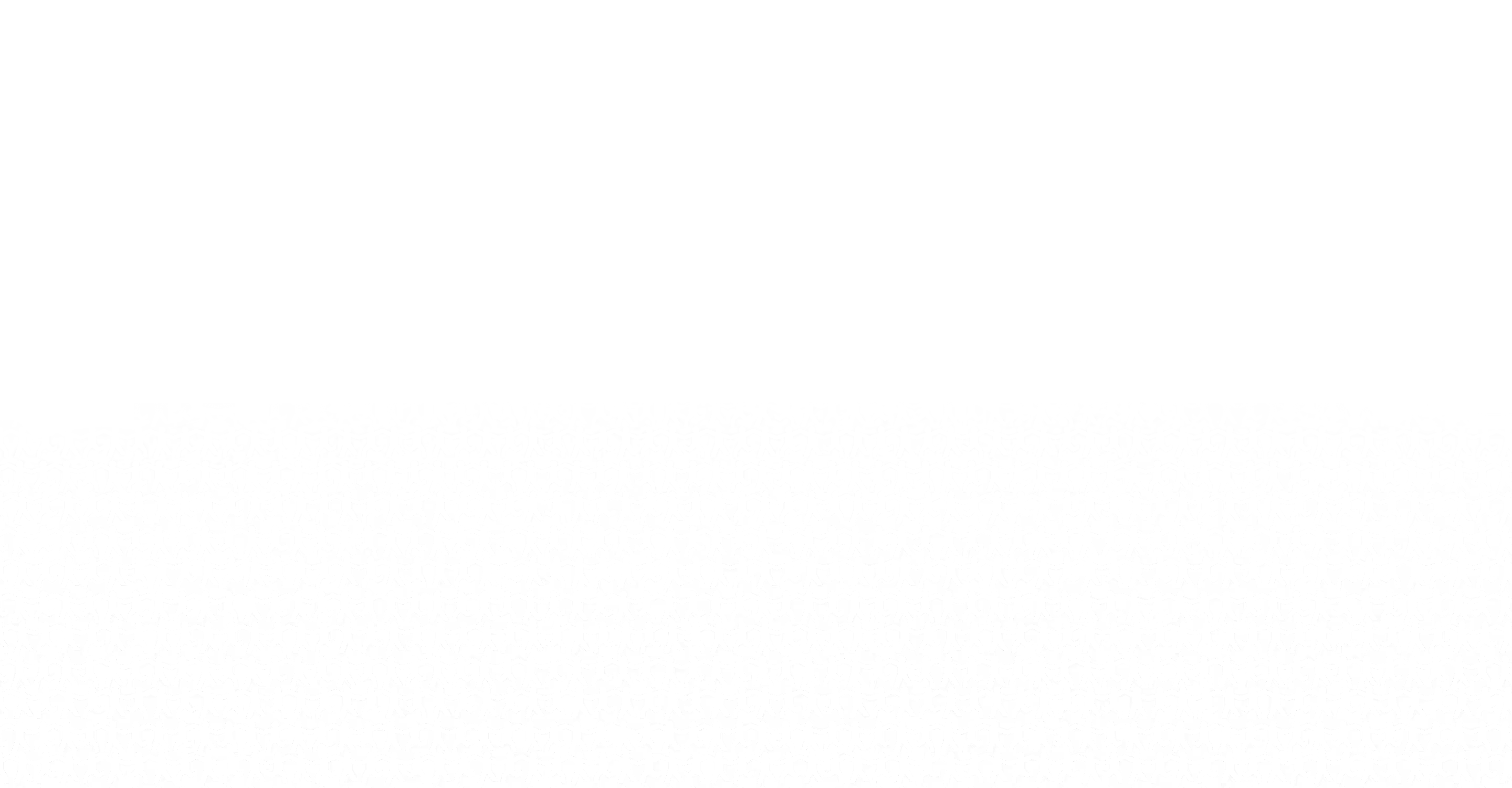
Close-Knit Community
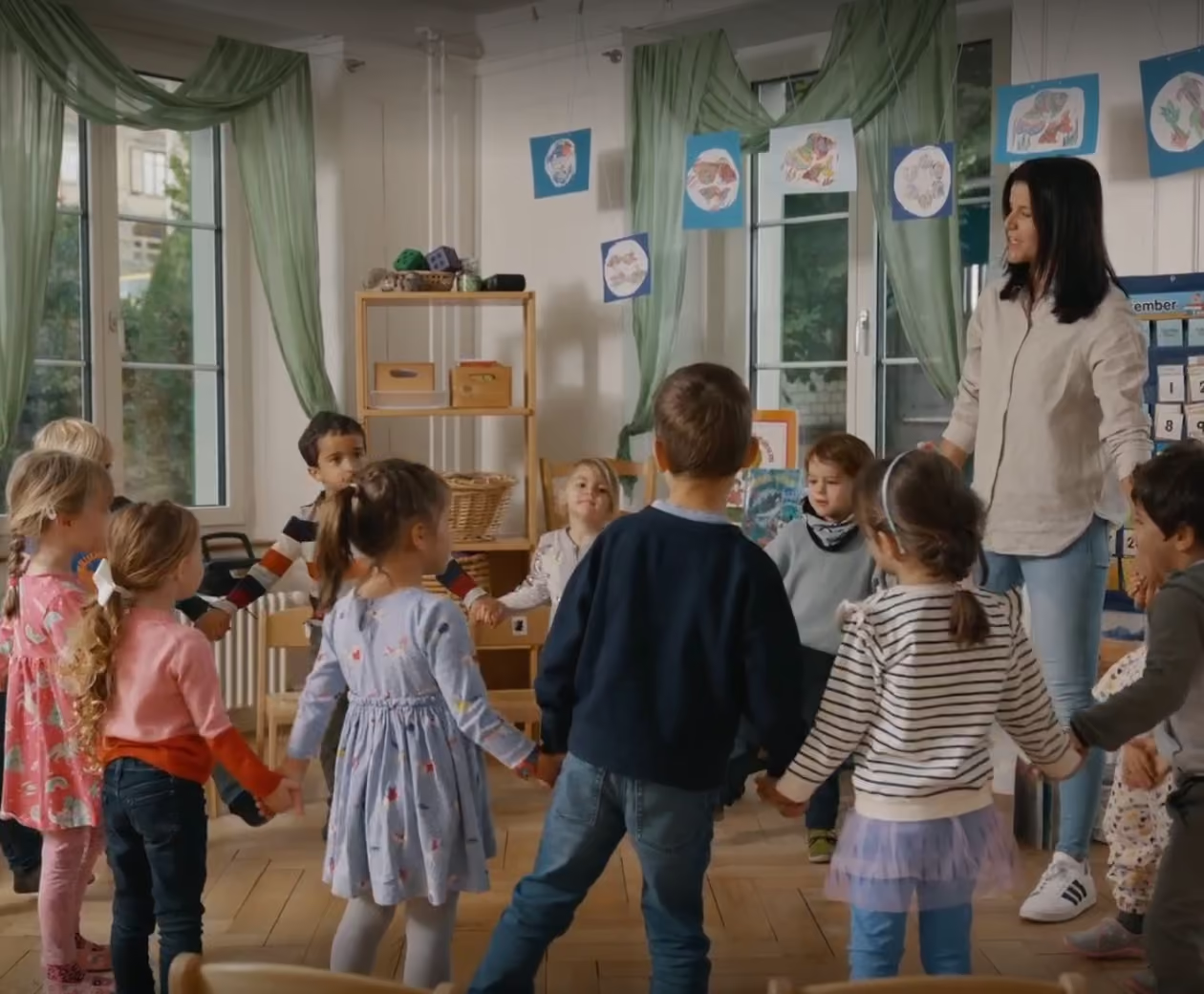
Our close-knit community is a distinct feature of our school. Students, teachers and parents work closely together and maintain a collaborative relationship. Parents are viewed as partners in their child’s education. Our small school enviroment means that our students and families are more than a number, reflecting the small school culture that is evident on campus.

.avif)
Holistic
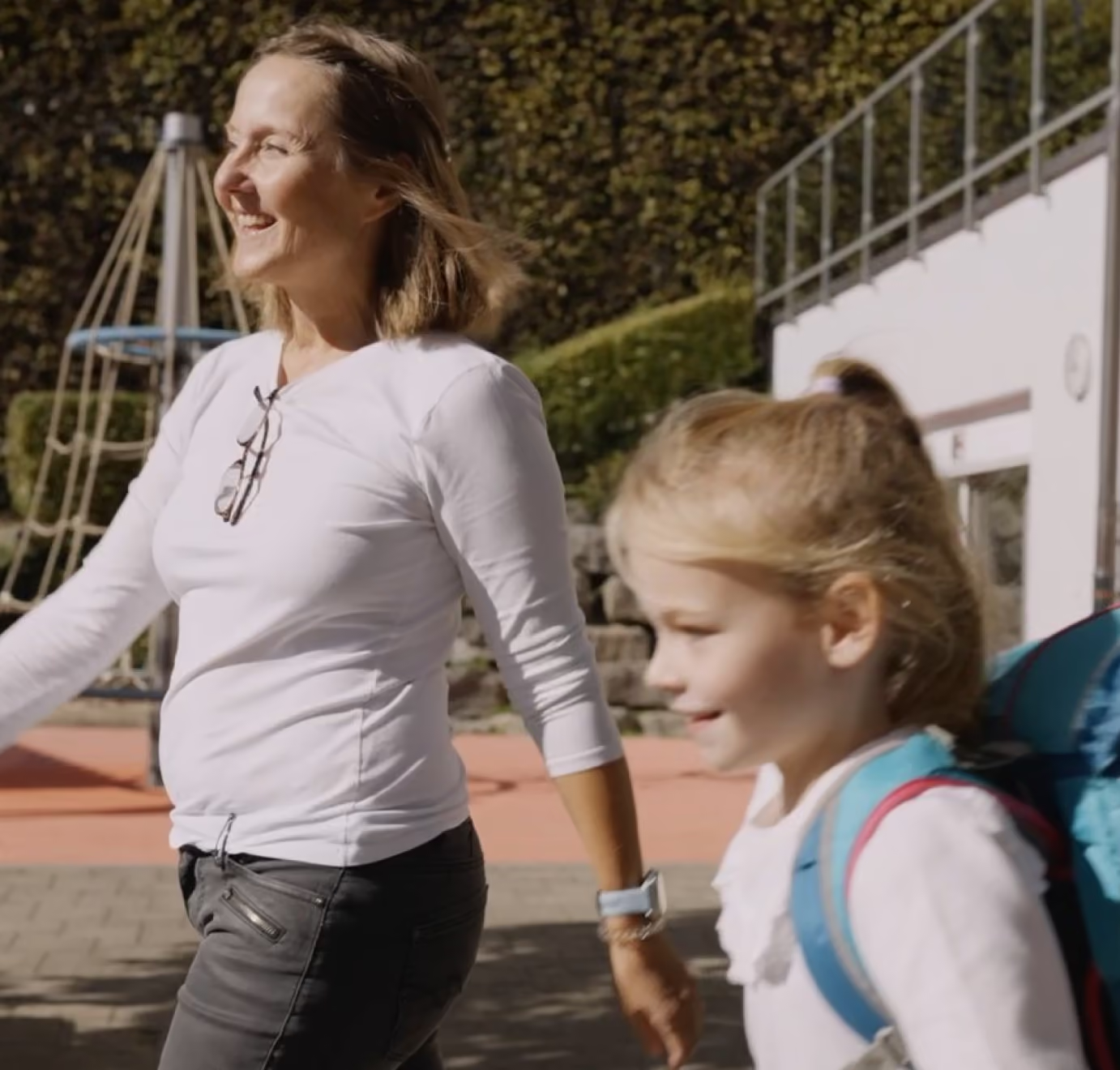
Our approach views education and the student hollistically. This involves students learning different subject disciplines and understanding how each subject contributes significantly towards the academic development of a child. Equally, students are encouraged to maintain a balance between working hard and recreation.
Innovative & Traditional
Preparing students for the world of tomorrow requires us to emphasise skills that we believe to be important for their future. Examples of these are interpersonal, critical thinking and presentation skills. Equally we safeguard tried and tested methods of learning that remain and will remain relevant in the future.
.avif)
.avif)
Local & Global
As a bilingual school we are locally rooted and globally minded. We support the integration into Swiss local life, valuing ist culture, traditions and mindset. Equally our perspectives are global, allowing us to make connections and understand different perspectives.
Your Expectations
At a bilingual school, all children regardless of their native language or cultural background should feel equally comfortable, welcomed and challenged. We use our students' diverse cultural backgrounds as a chance to foster such an environment.Your child will experience a challenging and internationally minded learning environment in which they can develop optimally. German-speaking children will experience English like they would in a native language environment while meeting the goals of the Swiss National Curriculum, Lehrplan 21, in both languages at the highest level.
English-speaking children will be able to integrate into the local environment by learning German, experiencing the regional dialect and gaining a deeper understanding of the local culture.
Simultaneously, they continue to cultivate their native language as they would in an Anglo-Saxon educational system. This includes reading and writing skills, which, through the Swiss Matura or the International Baccalaureate (IB), gives them access to universities worldwide.
Immersive, Bilingual Education
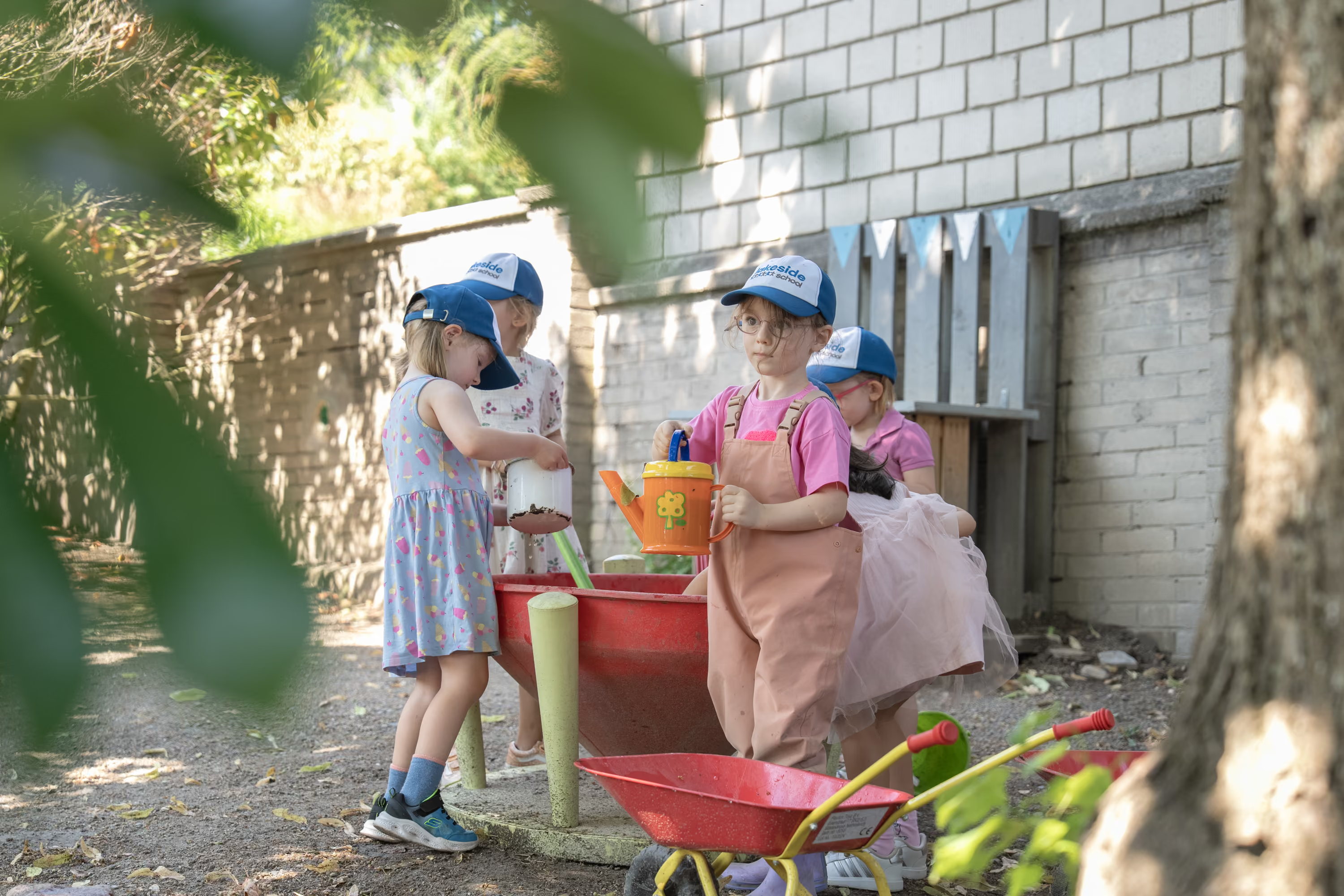
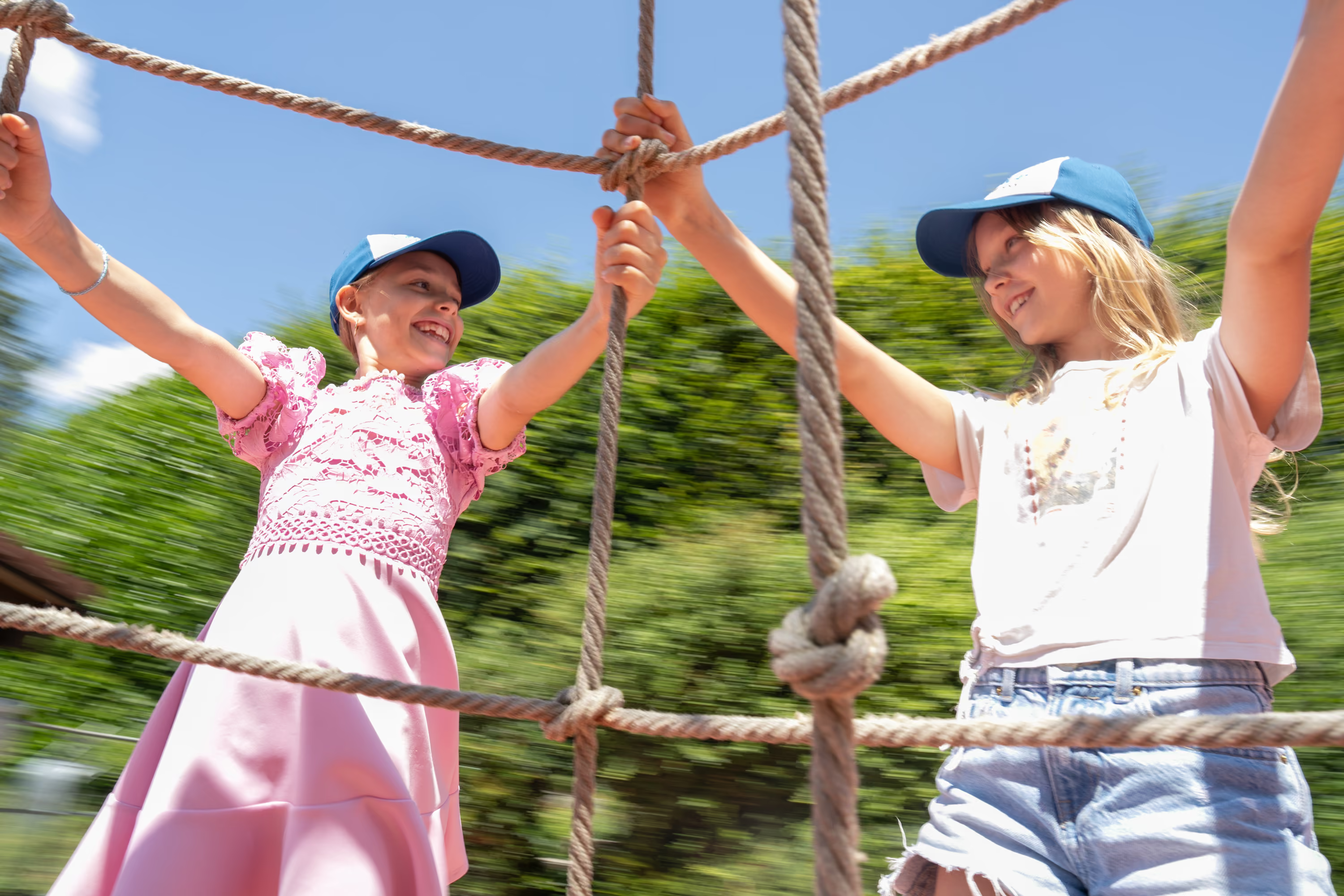
We do not merely teach two languages. We teach in two languages. English and German are more than just subjects. They are used in both speaking and writing across the entire curriculum. Our teachers are German or English native speakers and can embed the culture of the language into their teaching, ensuring a fully immersive environment.

.avif)
Bilingual Curriculum
We are a state-approved school and fulfil all requirements and goals of the Swiss National Curriculum, Lehrplan 21. We also meet international standards, using carefully selected elements from international curricula. As a result, bilingual education at our school is not limited to the respective language as a subject but encompasses all subjects. We set the same challenging requirements in both languages in all four areas (listening, speaking, reading and writing).
Educational Success in Four Key Areas

A school is responsible for more than just imparting knowledge. We emphasise the development of four core competencies to prepare your child for the world of tomorrow.
To acquire knowledge and learn how to apply it.
To equip students with solid techniques and approaches to learning.
To effectively interact with other children through age-appropriate communication and conflict management.
To encourage intrinsic motivation, independence, resilience and self-esteem.
Frequently Asked Questions & Answers
What makes bilingual education so beneficial?

A bilingual education from the early years comes with various advantages that last a lifetime. Being able to acquire both English and German like a native speaker is clearly the largest advantage. Even if a child transitions to a monolingual education system after Primary School, the acquired language stays with them for the rest of their life. Additionally, research suggests that the brain of a bilingual learner forms differently and fosters skills such as adaptability and cultural competency, allowing one to make conceptual connections more easily.
How do bilingual classes work?
In both Pre-Kindergarten and Kindergarten, each class has one English and one German-speaking class teacher teaching together. Like in a bilingual family, children are simultaneously exposed to both languages. In Primary School, students are instructed in English and German. One native English-speaking and one native German-speaking class teacher share the responsibility for the class and coordinate their planning closely. The class has an English week where all subjects, including Mathematics and Environmental & Social Studies, are taught in English. The following week the same applies in German. Specialist subjects, such as Music, Physical Education, etc., are taught in either English or German.
What is the difference between a bilingual school and a public school?
We offer a fully immersive English and German (50:50) programme with equal instruction in both languages. As an academically rigorous school, 60 % of our students transition to a Gymnasium (secondary university prep school) compared to the local school average of 20 %. As a day school, we offer comprehensive care, including Day Care (before and after school care), catered lunches, extra-curricular activities, and a door-to-door school bus service. We celebrate our school community by organising events for our students and parents. Our small class sizes, the small and familiar environment as well as our qualified and experienced educators who view teaching as a vocation are further characteristics that make a difference towards our school. At Lakeside School, parents are viewed as partners in their child’s education.
Is bilingual education difficult?
When joining a bilingual school, it is advantageous to do so from the earliest possible point. Acquiring the additional language is easier at a young age. The older children get, the more it changes from language acquisition to an effort of language learning. However, we do accept monolingual students at primary age. For monolingual students joining us after Grade 3, we carefully assess whether our curriculum and pace of learning is suitable for the individual child.
What is the difference between a bilingual school and an international school?
As a bilingual school, we offer the best of both worlds. During the German weeks, students experience school life as they would in a German-speaking country, while their English week provides them with an experience of a school in an English-speaking country. Unlike international schools, accepting local students (Swiss passport holders) is not subject to a limited duration.
Does my child’s German suffer at a bilingual school?
A German-dominant child reaches at least the same level in German as they would in a monolingual school. For children with other language dominances, German language acquisition is slower than if they were taught in a purely German-monolingual school. In the bilingual setting, however, they benefit from also reaching a native-speaker level in English in the areas of reading and writing.
Additional Questions? Contact Us.